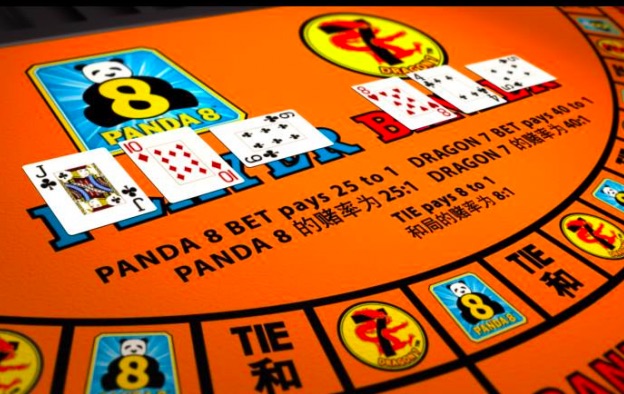
A Japanese academic study of nearly 4,000 baccarat players at Paradise City, a South Korean resort with a foreigner-only casino, found that in general terms, gambling behaviour became “more reckless” when those customers experienced consecutive wins at the table.
The study, using player data that was anonymised, was by five scholars from universities in Kyoto, Japan. The work was funded by Sega Sammy Holdings Inc, an investor in the Paradise City resort at Incheon. South Korean casino group Paradise Co Ltd is also an investor in Paradise City.
Tokyo-listed entertainment conglomerate Sega Sammy has publicly announced its interest in getting selected as a private-sector partner for Yokohama city, in the latter’s tilt at having a casino complex or “integrated resort” (IR), as such schemes are known in Japan.
The issue of problem gambling – and how either to prevent it or mitigate its effects – has been a central policy topic for Japanese lawmakers and the public, as the country works toward creating up to three casino resorts, in a first phase of market liberalisation.
“A fundamental issue in problem gambling is how repeated and risky betting behaviour varies as a function of outcome history,” when playing games of chance, said the study authors.
The paper, which claimed to be the “first attempt to analyse a large data set on baccarat betting,” looked at information from more than 7.9 million baccarat games played at the casino, by an aggregate of 3,986 players.
The work – published recently in the journal ‘International Gambling Studies’ – sought to “examine changes in the betting amount and in the rate of betting on hands with different dividend rates, according to prior consecutive wins or losses”.
The paper said: “The behavioural tendency observed in a streak of wins can also be interpreted as a phenomenon reflecting the ‘hot-hand fallacy’, originally proposed in the context of basketball shooting – that is, the unreasonable and erroneous belief that the occurrence of a random event is less or more likely to occur.”
The authors stated: “The proportions of multiple bets, including ‘long shots’ – hands with low winning percentages and high dividend rates – decreased after sequential losing, but increased after sequential winning.”
Japanese, Chinese players
In baccarat, a ‘tie’ bet has greater ‘house’ advantage for the casino, then either the ‘player’ or ‘banker’ bets, although some baccarat games may also offer ‘proposition’ or ‘special’ bets that have high winning-payout ratios, but long odds for the player.
The estimated mean age of the players in the study was 46.4 years, said the researchers. Most players were male, and approximately 40 percent were Japanese, and 40 percent were Chinese.
Thus, the typical player in the sample was “a middle-aged Asian male,” said the authors.
The work appeared to confirm a commonly-held view among some commentators on casino operations: that Asian players sometimes “chase” their losses, i.e., stake more, or place bets more quickly, after one or more losing wagers, on the basis that some “luck” is just around the corner.
The authors noted: “The participants tended to bet more money after losing than after winning when the streak length was lower.”
Although to a lesser extent than seen after sequential wins, “the betting amount increased after sequential losing, despite the decreased proportions of multiple bets. These effects can be interpreted as chasing behaviour – risking larger stakes to try to recoup losses,” the researchers wrote.
It is commonly said by commentators on casino operations that many Asian players look for “patterns” or “trends” in results when playing baccarat, even to the extent that when results are traced in graphical form, they can seem to resemble a dragon or another familiar image. That particular topic was not directly addressed by the study.