Macau casino operator MGM China reported higher net revenue for the first quarter of 2026, supported by growth in mass-market gaming, though earnings declined slightly amid higher costs.
The firm generated net revenue of just over US$1.12 billion for the three months ended March 31, up 9.2 percent year-on-year, according to results released on Wednesday by the parent, U.S.-based MGM Resorts International.
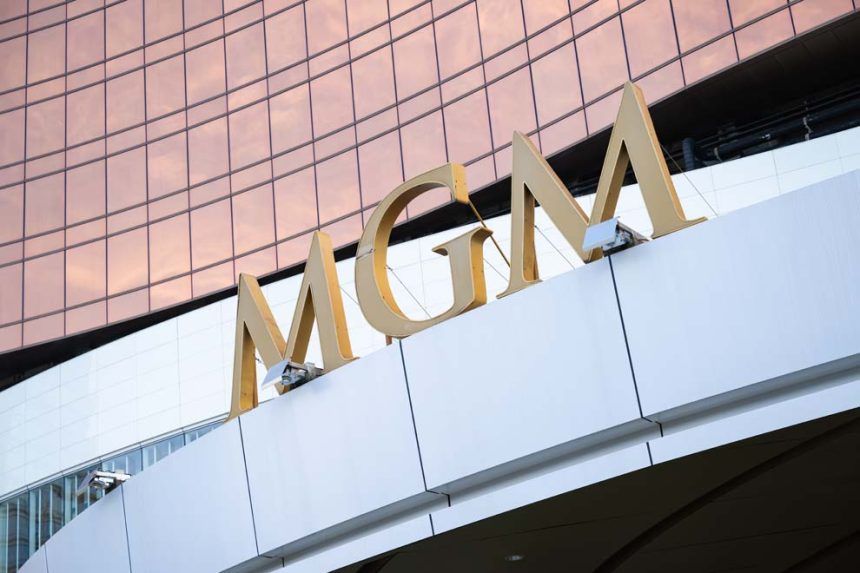
In Macau, the MGM group runs the MGM Macau resort (pictured) on Macau peninsula, and MGM Cotai in the city’s Cotai district.
The Macau unit’s adjusted earnings before interest, taxation, depreciation, amortisation and rent (EBITDAR) for the reporting period stood at nearly US$273.5 million, representing a 4.2-percent decrease from a year earlier. The decline reflected increased expenses including higher branding-related fees paid to the parent.
Intercompany branding licence fee expense for MGM China in the opening quarter of 2026 was US$41 million, compared with US$18 million in the prior-year quarter, per MGM Resorts filing.
This was the first quarter reflecting the new long-term branding agreement between MGM Resorts and MGM China.
The new branding-related fees, in effect from January 1 this year, doubled the percentage of MGM China’s adjusted consolidated net monthly revenues it must pay as a licensing fee to use the ‘MGM’ brand. The amount went up from 1.75 percent of such revenues to 3.5 percent.
After the new fees were announced in December, banking group Morgan Stanley cut its 2026 and 2027 EBITDA estimates for MGM China by 7 percent each, to incorporate the higher royalty payments to parent MGM Resorts.
Brokerage Jefferies had also flagged that MGM China could see a lower dividend per share this year and in 2027 amid the doubling of the branding fees.
Wednesday’s announcement said MGM China’s gaming revenue reached US$977 million in the first quarter of 2026, a 9.0-percent increase from the prior-year quarter.
Main floor table games win for the period rose 18.0 percent year-on-year, to nearly US$1.08 billion, which the company said indicated continued strength in the premium-mass and base-mass segments. Main floor table drop increased by 9.5 percent year-on-year, to US$3.97 billion.
In its own filing to the Hong Kong Stock Exchange, MGM China said first-quarter adjusted EBITDA – under IFRS accounting standards – stood at HKD2.46 billion (US$313.6 million), up 3.8 percent year-on-year, with growth supported by MGM Cotai.
But adjusted EBITDA margin for the three months to March 31 was 28.0 percent, compared with 29.6 percent in first-quarter 2025.
MGM China said in a separate press release on Wednesday that first-quarter daily total gross gaming revenue (GGR) grew 13 percent year-on-year, and daily mass GGR, including slot machines, surged 19 percent to an “historical high”.
On a property basis, MGM Cotai recorded revenue of HKD5.33 billion for the first quarter, up 10.1 percent year-on-year. Adjusted EBITDA were HKD1.63 billion, representing a year-on-year increase of 11.0 percent.
MGM Macau achieved revenue of HKD3.44 billion for the period, compared with HKD3.15 billion a year earlier. Adjusted EBITDA however were down 7.9 percent year-on-year, at HKD831.5 million.
MGM China said its overall GGR market share stood at 15.4 percent in the opening quarter of 2026, compared with 15.7 percent a year ago.
On Wednesday, MGM Resorts reported first-quarter consolidated net revenues of US$4.45 billion, up 4.2 percent from a year earlier. It reported net income of US$125.1 million, down 15.8 percent from first-quarter 2025.
The parent’s first-quarter expenses rose 7.3 percent year-on-year, to US$4.16 billion.