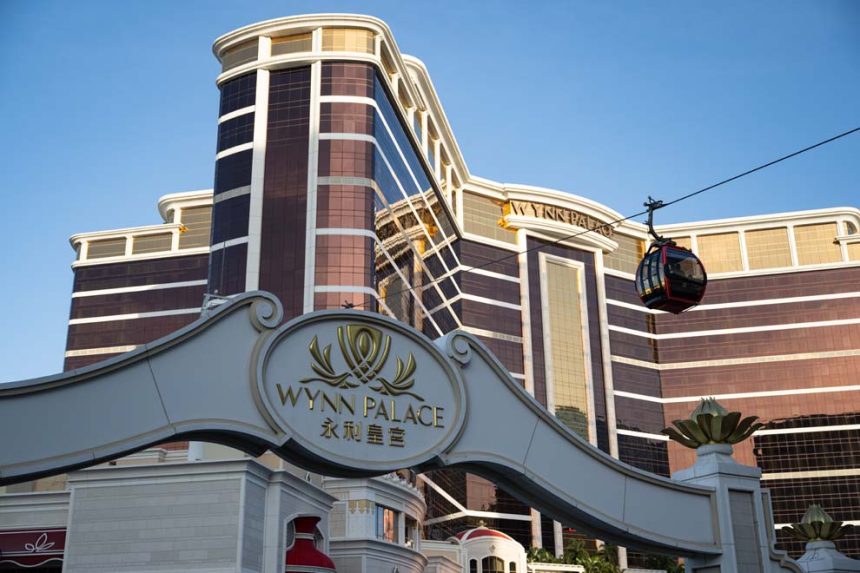
The Macau government’s approval for Wynn Macau Ltd to expand its Wynn Palace resort in Cotai marks an important milestone in the operator’s non-gaming investment plans, but the projects are likely to increase overall capital spending and could weigh on leverage over the next two years, according to CreditSights.
On Wednesday, Wynn Macau Ltd said it had secured approval for public land-concession changes, allowing for the construction of a new hotel tower, a theatre, and an event and entertainment centre. The Macau government has given the company up to five years to complete the development.
U.S.-based Wynn Resorts, the parent of Wynn Macau Ltd, announced in May that a US$950-million second hotel tower would be developed at Wynn Palace.
The new hotel facility – to be branded “The Enclave at Wynn Palace” – is to feature 432 suites and sit directly adjacent to, and connect with, the east entrance of Wynn Palace. Construction is likely to start in the second half of 2026, and take two-and-a-half years, according to Wynn Resorts.
CreditSights noted in its update that the new accommodation tower is expected to increase Wynn Palace’s room inventory by 25 percent and suite capacity by 50 percent.
The institution expects only limited spending on the project this year, with capital expenditure focused on piling and early development work.
CreditSights noted that Wynn Macau Ltd anticipates capital expenditure of US$400 million to US$450 million in fiscal-year 2026, excluding US$70 million to US$80 million in maintenance costs. Capital expenditure is expected to rise to between US$700 million and US$750 million in fiscal-year 2027.
The Wynn group has already paid the Macau government an additional land premium of MOP652.31 million (US$80.8 million) for the land-use changes.
While it forecasts Wynn Macau Ltd to remain free cash flow positive this year, CreditSights expects significant tightening on its cash-generation position next year given the larger investment programme.
Should free cash flow prove insufficient, Wynn Macau Ltd could draw on its approximately US$1.35 billion of undrawn revolving credit facilities as of the end of March, the institution suggested.
“While this would likely put a strain on Wynn Macau’s leverage metrics – which still remain above pre-pandemic levels –, we opine that deleveraging has become a lower priority for the company, as evidenced by its stagnant leverage levels over the past several quarters,” CreditSights stated.
“Management appears more focused on driving incremental EBITDA [earnings before interest, taxation, depreciation, and amortisation] to support margin preservation/growth,” the research house added.