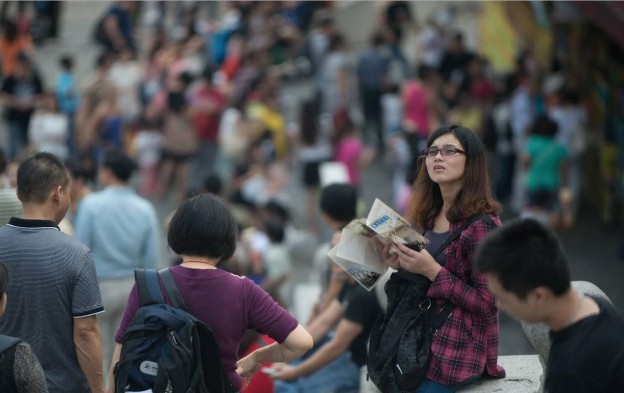
The Macao Government Tourism Office is studying the potential for introduction of a tourist tax to the city, said the bureau’s head, Maria Helena de Senna Fernandes, in comments over the weekend.
“We are conducting a comparative study of [tourist] taxes being implemented in places like Venice [in Italy]… and Japan,” Ms Senna Fernandes told Portuguese news agency Lusa.
The head of the tourism bureau said there was no deadline for the study to be concluded, but noted: “We don’t want to drag it too long, as we want to present the results so that they can be discussed in detail.”
Ms Senna Fernandes said the study would look into why some destinations had introduced tourist taxes, and what had been the outcome of such policies so far.
She clarified in further comments on Monday that tourist taxes introduced in overseas jurisdictions were mostly aimed not at curbing visitor volume, but at increasing revenue for the relevant local authority, in order to make more financial resources available for development and maintenance of tourism-related infrastructure.
In January Ms Senna Fernandes had noted that the Macau authorities were forecasting the 2019 visitor tally to the city could be more than 38 million. In 2018, the aggregate number of visitor arrivals exceeded 35.80 million, an increase of 9.8 percent from 2017, according to official data.
The Macau government is one of the wealthiest in the world adjusted by territory size, mostly due to taxes on gaming at the city’s casinos. In 2018, it collected approximately MOP106.78 billion (US$13.21 billion) in direct gaming tax revenue; the figure accounted for almost 80 percent of the Macau government’s total revenue in 2018, which stood at around MOP134.20 billion.
The Macau government ended 2018 with a fiscal surplus of MOP53.87 billion for the full year.
The city – with a total area of less than 31 square kilometres (12 sq miles) – is one of the mostly densely populated places in the world, having a population of 667,400 as of end-2018.
Commenting on the potential introduction of a tourist tax to Macau, the chief executive of local casino operator MGM China Holdings Ltd, Grant Bowie, said the “critical point” was that revenue collected should be “used specifically for the promotion of tourism. It shouldn’t just be an alternative taxing collection method,” he told public broadcaster TDM on Monday.
“Frankly, I think the government of Macau is particularly fortunate and has a very sustainable and solid financial position at this point in time,” Mr Bowie added.
The majority of gamblers in Macau’s casinos are tourists. Investment analysts however have noted in previous commentary on Macau that there need not be a direct correlation between numbers of tourists to Macau and gaming spend in casinos. This is because research indicates that high-stakes play by a relatively small number of visitors is still an important component of the market.
Venice – an Italian city famous for its Renaissance palaces and canals, but a place where local ecology is also under threat from tourist volume – plans to introduce in May a tourist tax. The local government intends to charge day-trippers EUR3 (US$3.4) from May 1, with the amount rising to a maximum of EUR10 within three years.
Japan started in January imposing a “departure tax” for foreign travellers leaving by air or sea. The fee – dubbed ‘sayonara tax’ – is JPY1,000 (US$9.10) and revenue collected is to be put toward building and maintaining tourism infrastructure.