Banking group Morgan Stanley says the broad regulatory framework for Japan so far agreed between the governing coalition – the Liberal Democratic Party and Komeito – was “better than feared”.
“The revenue tax rate of 30 percent is lower than Macau (39 percent) but higher than most of the other Asian jurisdictions (including Singapore at approximately 17 percent),” wrote the bank’s analysts in a report issued earlier this week.
“This is better than the earlier suggested staggered rate going as high as 50 percent. The current tax rate should support return on invested capital of 14 percent to 20 percent, according to our calculations,” said Morgan Stanley.
“Entry fee for locals of JPY6,000 [US$56] is roughly half of what Singaporeans pay, and thus a positive. Personal income per capita for Japan is only 9 percent lower than that of Singapore,” noted the analysts.
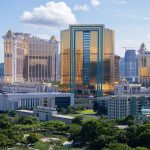
Morgan Stanley estimated in its report that Tokyo (pictured) and Osaka together could account initially for two-thirds of the US$15-billion gross gaming revenue (GGR) that could be generated by a Japanese casino market in the early stages of market liberalisation.
This assumed “a GGR of US$6 billion for the Tokyo market and US$4 billion for the Osaka market” said Wednesday’s summary by a team of six analysts. A maximum of three resorts are likely to be allowed in the first phase.
The bank noted nonetheless “Tokyo seems to be busy with the Olympics”. That was a reference to the summer Olympic Games to be held there in 2020, and hinted that the capital might not host an actual casino resort in the first phase of liberalisation. Given Japan’s fast and efficient transport systems, and the size of some of its urban conurbations, casino resorts in nearby places could still serve Tokyo domestic consumers and overseas tourists visiting the capital.
“While Osaka seems to have all its stars aligned, there is no certainty around other locations,” said Morgan Stanley. It added that Yokohama was a candidate, and Tomakomai, a resort city on the northern island of Hokkaido, Wakayama and Nagasaki were “other interested locations”.
“We expect Japan GGR of US$15 billion by 2025, and EBITDA [earnings before interest, taxation, depreciation and amortisation] per city to be in the range of US$1 billion to US$2 billion, providing a comfortable 14 percent to 20 percent return as long as capex [capital expenditure] remains below US$10 billion,” added the Morgan Stanley team.
“We acknowledge there many factors that are still unknown and could change these estimates meaningfully,” the bank stated.
The institution said it thought the investment community as a whole was “overly optimistic” regarding what casino GGR could be achieved in Japan, as there had been an assumption there would be a correlation with domestic consumer demand for pachinko, which Morgan Stanley said had generated revenue equal to US$30 billion in 2017.
The institution said its estimate for Japan casino GGR was based on a formula involving the ratio of land-based casino GGR produced in other major markets, to nominal gross domestic product in those markets.
Morgan Stanley issued a separate note on Wednesday, on Genting Singapore Plc, a Singapore casino operator that has issued Japanese yen-denominated bonds and has expressed clear interest in a Japan licence.
“We now expect a higher net present value contribution for the Japan casino licence with a decent investment return of 14 percent,” were Genting Singapore to be successful, said the memo.