Macau casinos are “highly exposed” to the possible fallout from any U.S.-China trade war, says a new business risk assessment from Hong Kong-based consultancy Steve Vickers and Associates Ltd.
“The gaming sector in Macau is highly exposed. Any significant slowdown or fall in the yuan’s value may lead to Beijing’s further curbing of capital outflows, so dampening casino revenues,” said the report issued on Monday, referring to China’s currency.
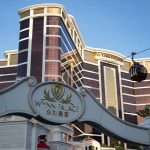
The assessment, “U.S.-China Trade War: Winners and Losers” also made reference to the possibility that the refreshment of Macau gaming rights for the three operators in that market that are U.S. majority owned – Sands China Ltd, Wynn Macau Ltd and MGM China Holdings Ltd – could become a hostage to geopolitics when the current six Macau concessions expire in either 2020 or 2022.
The report stated: “Three of Macau’s six gaming concessionaires are [majority owned by] U.S. companies: Las Vegas Sands [Corp], MGM [Resorts International], and Wynn Resorts [Ltd]; and Las Vegas Sands founder Sheldon Adelson boasts close ties to U.S. President [Donald] Trump. These companies now sit on a geopolitical fault line. Their Macau concessions can therefore be on the line.”
The consultancy’s chief executive Steve Vickers told GGRAsia separately by email: “China could certainly get tough in a number of different ways. The most brutal (and currently unlikely) would be to refuse outright to renew existing U.S. [controlled] concessions or to force shareholding changes.”
The report itself noted, referring to general commercial risk from any U.S.-China trade war: “Businesses should assess the political risks posed by nationalist measures, such as boycotts. Companies might consider restructuring joint ventures, so as to invest alongside partners deemed ‘neutral’.”
There had been some speculation in the investment community that the acquisition in March of a slightly fewer than 5 percent stake in Wynn Resorts – the parent of Wynn Macau Ltd – by Chinese-owned Macau operator Galaxy Entertainment Group Ltd, might have been the first phase of a more general realignment of the equity interests within the Macau operators, ahead of the refreshment process for gaming rights in the city.
Referring also to the effect of a widespread boycott of South Korean businesses in China – including Chinese tourists staying away from South Korea – following a recent row between China and South Korea regarding the placement of U.S. anti-missile technology on Korean soil, the risk assessment document stated: “Consumer goods businesses operating in China may face boycotts…”
Steve Vickers and Associates, a specialist political and corporate risk consultancy, noted regarding the possibility of boycotts: “Targeting foreign businesses will prove hard, as many such businesses operate in joint ventures with Chinese partners. Even so, national champions will benefit by wrapping themselves in the flag.”
GGRAsia asked Mr Vickers by email whether the fact that Macau is a member – in its own right – of the World Trade Organization (WTO), might insulate the jurisdiction from any U.S.-China trade war.
He said: “I doubt that Macau will be insulated as a consequence of its independent WTO status. Other than the gaming business, Macau is just too small to be given specific consideration at the strategic level.”
He added that, in his firm’s opinion, “the harsh reality is that strategic decisions are not made in Macau but rather in Beijing: this is because of the huge scale of the gaming operations in Macau and the political sensitivities of U.S. businesses being allowed to repatriate very significant amounts of Chinese money back home.”
The latter point was understood to be a reference to dividends from Macau operations being paid to shareholders of the U.S. parent firms.