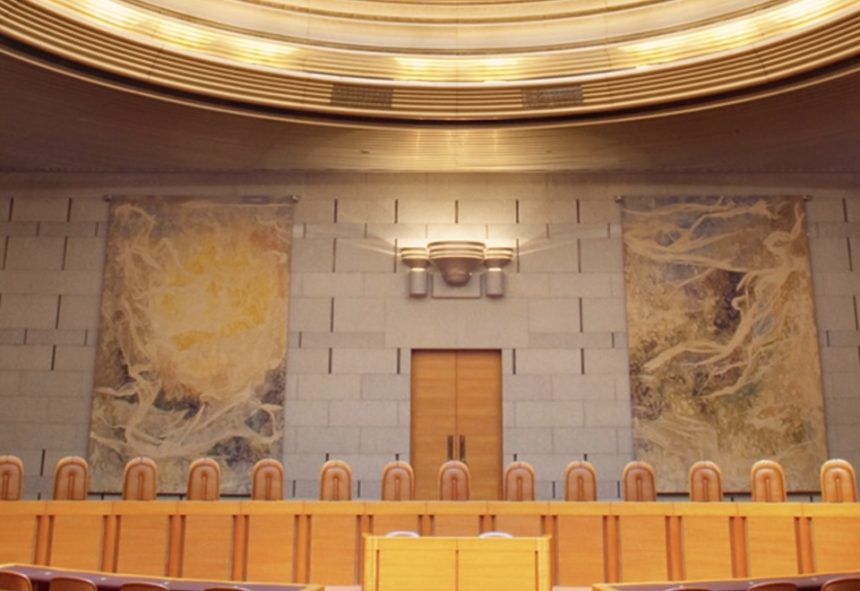
Japan’s Supreme Court (pictured) has rejected an appeal by Jun Fujimoto, a former president of Japanese gaming conglomerate Universal Entertainment Corp, against an April 2024 ruling by the Tokyo High Court, that he breached his fiducial duty or duty of loyalty as a director of the firm.
The rejection of the appeal was on February 19, according to a Friday announcement by Universal Entertainment. Mr Fujimoto will have to pay the costs of his failed appeal.
Universal Entertainment is the parent of Tiger Resort, Leisure and Entertainment Inc, the operator of the Okada Manila casino resort in the Philippine capital.
At the time of the lower court’s ruling, Mr Fujimoto was also found liable for payment of compensation claim from Universal Entertainment amounting to just under US$43.5 million.
The company said in a further Friday announcement that in a separate but related matter, the Supreme Court also upheld a ruling of a lower court that Universal Entertainment could not claim damages on a petition that one of its shareholders had defamed the company.
As petitioner in the latter matter, Universal Entertainment will have to bear its own costs.
Universal Entertainment had preserved the right to claim compensation for damages once judgement had been finalised against Mr Fujimoto, “by taking measures preserving the assets” owned by him, “including but not limited to his real estate, 658,000 shares” in Universal Entertainment, and “deposits, and directors’ remuneration”.
In April 2024, Mr Fujimoto had stepped down from his role as the group’s president following a ruling in the Tokyo High Court on a shareholder lawsuit dating back to August 2019.
The court had found Mr Fujimoto had caused Universal Entertainment to transfer nearly US$43.5 million outside the company without reasonable necessity and without following internal decision-making procedures, thereby breaching his fiduciary duty or duty of loyalty as a director of the company.