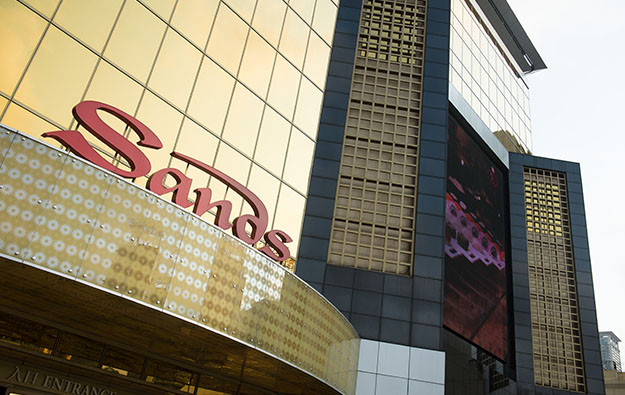
Casino operator Las Vegas Sands Corp (LVS) and its Macau unit Sands China Ltd have been upgraded to ‘BBB’ from ‘BBB-’ by S&P Global Ratings, with the institution citing expectations the group will maintain disciplined leverage and limit major new development commitments over the next few years.
S&P also raised the issue-level ratings on unsecured debt at Las Vegas Sands and Sands China, while maintaining a “stable” outlook across the group.
Las Vegas Sands also runs, via a subsidiary, the Marina Bay Sands casino complex in Singapore.
The rating agency said it expects Las Vegas Sands to sustain adjusted net debt leverage at around 2.5 times through completion of the expansion of the Marina Bay Sands property.
That level offers a cushion relative to its 3-times downgrade threshold, even amid potential macroeconomic volatility and competitive pressures, the institution added.
Marina Bay Sands is currently pursuing an US$8-billion expansion, aimed at enhancing its position, and targeted for opening in early 2031.
As of March 2026, about US$2.8 billion had been invested in the expansion project, S&P said in a recent report.
“Through 2028, we assume Las Vegas Sands will incur additional capex for the project of about US$1.8 billion. We assume the remaining US$2.4 billion capex will occur after 2028 through the expected opening of the project in early 2031,” wrote analysts Rivka Gordon and Dan Daley.
They added: “We expect Las Vegas Sands will finance remaining capex with funds from its Singapore delayed draw term loan, which had US$4.9 billion available as of March 2026.”
S&P noted that although the casino group had previously shown interest in markets such as Thailand and Texas, in the United States, regulatory uncertainty means “gaming legalisation over the next few years is very unlikely”.
Macau recovery
The rating agency also said the continued recovery in the Macau market would underpin Las Vegas Sands’ performance. Market-wide gross gaming revenue (GGR) rose circa 14 percent year-on-year in the first quarter of 2026, according to official data.
“We expect this trend to continue… but we expect growth to slow down given near-full hotel occupancy, limited new capacity, and a slower return of base mass players,” the S&P analysts noted.
“As a result, we expect 2026 market-wide GGR will likely grow around 7 percent [year-on-year] for 2026,” they added. “In 2026, we expect EBITDA [earnings before interest, taxation, depreciation, and amortisation] margins to be relatively stable as we expect the promotional environment will persist and wage increases will be modest.”
The rating agency said the casino group “materially outperformed” the overall market GGR growth in the first quarter, “increasing revenue 24 percent”, driven by “positive results of its reinvestment strategy, strong growth in VIP revenue, and increased room capacity”.
“However, EBITDA grew about 17 percent, demonstrating the increase in reinvestment required to acquire customers, the growth in VIP revenue as percentage of total revenue, in addition to modest wage growth,” the analysts observed.
They added: “Given our expectation for the heavy promotional environment to persist, we forecast relatively flat EBITDA margins, translating into approximately US$2.4 billion of property-level EBITDA in Macau compared with about US$2.3 billion in 2025.”
The rating agency said Las Vegas Sands’ shift in shareholder returns policy since the pandemic also supported its credit profile, with the firm moving towards a greater use of share repurchases rather than dividends.
The institution expects Las Vegas Sands’ total dividends to be about US$1.05 billion in 2026, including the Sands China dividend not retained by the parent.
“We believe this sustained shift toward a higher level of share repurchases provides Las Vegas Sands with greater flexibility to allocate capital to growth opportunities that arise over time or to manage liquidity during periods of operating volatility,” the S&P team stated.
Total shareholder returns – including Las Vegas Sands’ dividends, Sands China’s dividends not retained by the parent, and share repurchases – are projected at about US$3.2 billion in 2026 and US$3.3 billion in 2027.