The year 2025 was marked by things that didn’t happen in the Asia-Pacific gaming sector, as much as by things that did.
The decision in July by the-then Thai government to withdraw a bill that could have led to the legalisation of casino business in the Southeast Asian kingdom, was a setback for a regional path to liberalisation that at times had seemed unstoppable.
For the time being, Thailand seems to have shelved the casino topic, with the coming to power of a prime minister who said he opposed the legalisation of gambling business as a means to boost the nation’s economy.
Something else that didn’t happen, was any year-on-year fall in Macau gross gaming revenue (GGR) amid the United States-China trade spat. That was despite some initial concerns among local commentators about its effects on Chinese tourists’ spending.
Macau’s gross gaming revenue (GGR) tally for the first 11 months of 2025 stood at circa MOP226.52 billion (US$28.26 billion), an 8.6-percent increase from the prior-year period, showed government data. December was on track to post solid GGR growth, according to a number of brokerages.
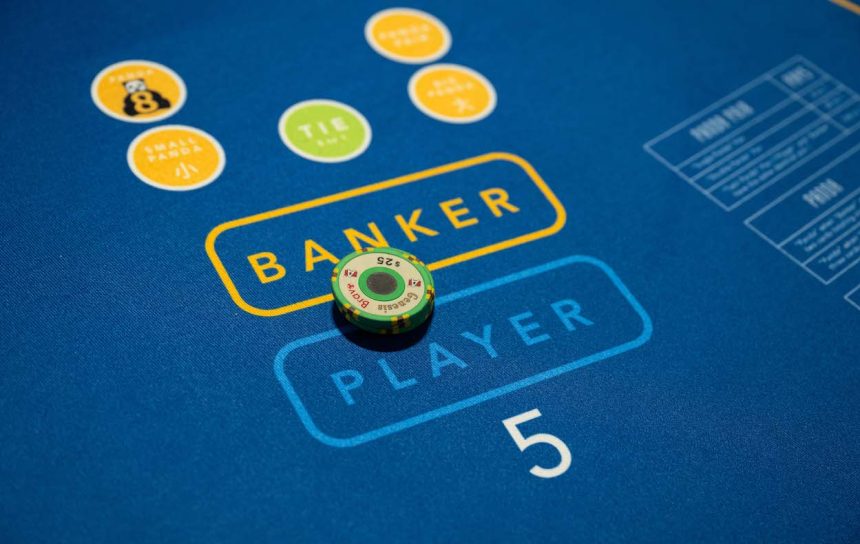
In the Macau market, side bets and ‘smart tables’ continued to be big hits for the industry during 2025, with most operators – or investment analysts – reporting widespread adoption of both.
Additionally a hot topic – though marking the end of an era – was the exit of Macau satellite casinos. Of two that had been expected to become core SJM Holdings Ltd properties – Casino Ponte 16 and Casino L’Arc – only the latter was ultimately saved.

In Singapore, Las Vegas Sands Corp broke ground in July on a US$8-billion Marina Bay Sands expansion, known as MBS 2.0. Construction of the new phase (pictured above, in a rendering) will be completed by June 2030, and open in January 2031, according to corporate information.
Las Vegas Sands also marked the end of an era, with news that chairman and chief executive Robert Goldstein will step down and move to an advisory role in March 2026.
Philippines, UAE and Japan
In the Philippines, a thing that half-happened, was a regulatory pushback against domestic online gambling.
While the central bank ordered in August the delinking of e-wallet platforms from gaming service providers, a threatened total ban against online had not been discussed by the year’s close.
Nonetheless In late October, Pagcor said it had witnessed a “sharp decline” in its income since August, which the regulator attributed to the e-wallet delinking and a slight decline in the number of new players.

Alejandro Tengco (pictured, above), chairman and chief executive of the Philippine Amusement and Gaming Corp (Pagcor), said in a keynote speech at Global Gaming Expo (G2E) Asia @ the Philippines 2025, that the dip was just a step towards long-term stability.
GGRAsia helped to produce content for the second day of that December conference. GGRAsia also marked a corporate milestone during the year, with the launch of the GGRAsia CSR Newsletter.
In Cambodia, the latter part of 2025 brought uncertainty for the country’s border casinos usually serving Thai customers, amid ongoing frontier clashes between Cambodia’s and Thailand’s armed forces.
The picture was somewhat brighter for NagaCorp Ltd, a Hong Kong-listed firm with a long-life casino monopoly in the Cambodian capital, Phnom Penh. In October, the company said that its casino gross gaming revenue for the nine months to September 30 had risen 29.6 percent year-on-year.
For another of Cambodia’s neighbours, Vietnam, the year closed out with some positive news for the land-based casino sector. A pilot scheme permitting casino play by economically-qualified locals at selected venues is to be reprised and extended.
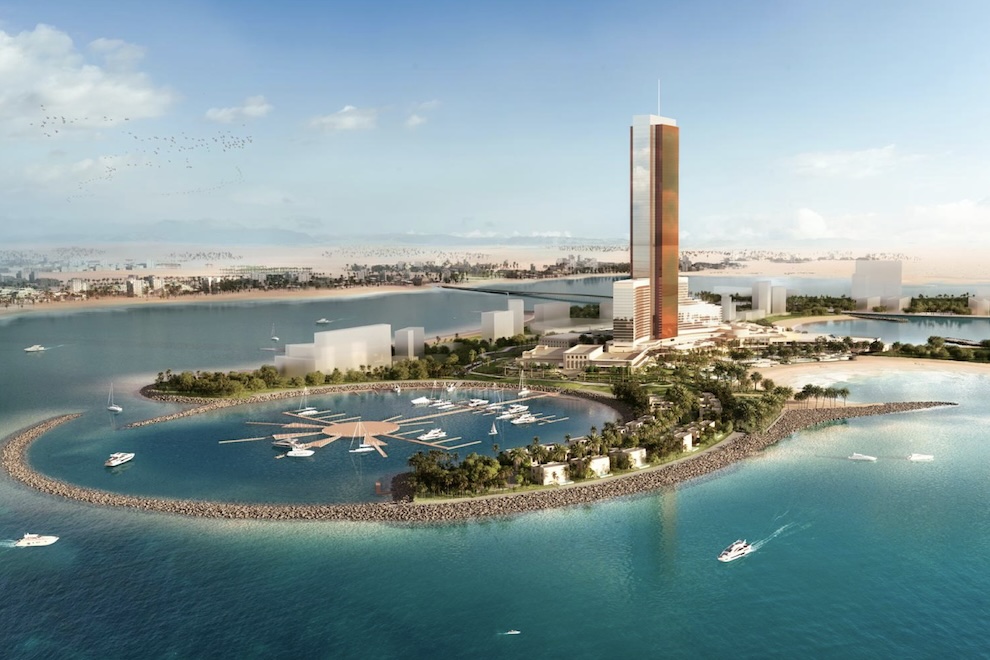
In mid-December, U.S.-based Wynn Resorts Ltd, parent of Macau casino concessionaire Wynn Macau Ltd, announced the topping out of the Wynn Al Marjan Island casino resort (pictured above in a rendering), in the United Arab Emirates (UAE).
The company also confirmed the US$5.1-billion budget for Wynn Al Marjan Island, and the target of opening the complex in the first quarter of 2027.
Also in the UAE, a company named Momentum Group launched the first online betting and casino platform in that market, marking a new milestone in the gaming legalisation process in the federal nation.
The year ended with Japan proposing a May 2027 start for a new application round for communities wishing to host an integrated resort (IR) with casino. The only one being built so far – MGM Osaka – marked in April the breaking of ground on the site. The cost of the venture – with local partners – is now put at JPY1.51 trillion (US$9.68-billion currently).